Common Sphynx Cat
Health Issues
What to actually watch for with a Sphynx cat's health — heart, skin, ears, temperature, and digestion — and practical ways to manage each one.
- HCM (heart condition) is the most significant breed-related health concern.
- Skin issues like oily buildup and sunburn are common but manageable.
- Ear wax buildup is more frequent than in furred breeds.
- Temperature sensitivity is an ongoing care consideration, not just comfort.
- Most issues are well-managed with consistent, breed-aware care.

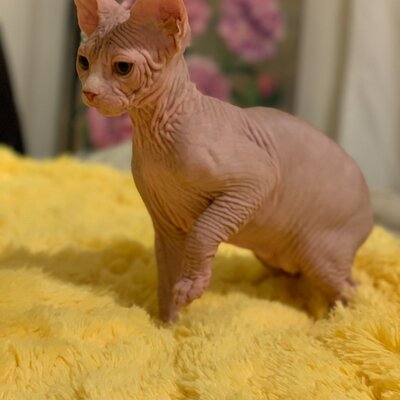
Hypertrophic Cardiomyopathy (HCM)
HCM, a thickening of the heart muscle, is the most significant health concern in the Sphynx breed. It can go undetected without screening, so periodic cardiac ultrasounds are worth discussing with your vet, especially since a kitten's breeding lineage plays a role in risk. See Sphynx Cat Lifespan for more on how this affects long-term health.
Skin Conditions
Without fur to buffer the skin, Sphynx cats are more prone to oily buildup, occasional acne (especially on the chin), and sunburn with unprotected sun exposure. Nearly all of these are manageable with the consistent bathing and skin-fold care detailed in my Sphynx Cat Care Guide.
Ear & Dental Issues
Sphynx cats tend to produce more ear wax than furred breeds, making regular ear cleaning essential to prevent buildup and infection. Dental disease is also common across cats generally, and Sphynx cats are no exception — regular dental checks and care matter just as much here as with any breed.
Temperature Sensitivity
Lacking fur insulation, Sphynx cats chill more easily in cold environments and can overheat in direct sun. This isn't a "disease" in the traditional sense, but consistent temperature management is a genuine, ongoing health consideration, not just a comfort preference.
Digestive Sensitivity
Some Sphynx cats run a slightly higher metabolism than furred breeds, which can translate to a bigger appetite and, occasionally, more sensitive digestion. A consistent, high-quality diet — see my Raw Diet guide — combined with a gradual approach to any diet changes (see How to Transition Your Cat to a New Diet) helps minimize digestive upset.
The Bottom Line
None of these conditions are unique to Sphynx cats being "unhealthy" as a breed — most are well-managed with consistent, breed-aware care and regular veterinary attention. Choosing a breeder who screens for HCM, and building a solid care routine early, addresses the majority of breed-specific risk.
❓ Frequently Asked Questions
What is the most serious health issue in Sphynx cats?
Hypertrophic cardiomyopathy (HCM), a heart muscle condition. It's the top reason breeder health screening and periodic veterinary cardiac checks matter for this breed.
Are Sphynx cats prone to skin problems?
Yes, mainly oily buildup, occasional acne, and sunburn risk, since there's no fur to buffer the skin. Regular bathing and sun protection manage most of these effectively.
Do Sphynx cats need more ear cleaning than other cats?
Yes, typically every 3 to 7 days, since they tend to produce more ear wax than furred breeds.
Are Sphynx cats generally unhealthy?
No, not as a rule. Most breed-related concerns are manageable with consistent, breed-aware care and choosing a breeder who screens for known conditions like HCM.
Do Sphynx cats have digestive issues?
Some run a slightly higher metabolism and bigger appetite, and can be a bit more sensitive to sudden diet changes, but a consistent, quality diet generally keeps digestion stable.
📚 Related Reading
Still have questions about your cat?
Book a free 15-minute initial consultation — we'll talk through your cat's specific needs.