Sphynx Cat Colors &
Patterns Explained
Sphynx cats aren't colorless just because they lack fur — here's how pigment shows up in their skin, and what the common colors and patterns actually look like.
- Sphynx cats carry the same pigment genetics as furred cats, visible in skin.
- Common colors: black, white, blue, chocolate, lilac, cinnamon, red, cream.
- Tabby, tortoiseshell, and bicolor patterns all show up in the skin.
- Color is purely cosmetic — it doesn't affect care or temperament.
- Prioritize health testing over color rarity when choosing a breeder.

Yes, Sphynx Cats Have Color
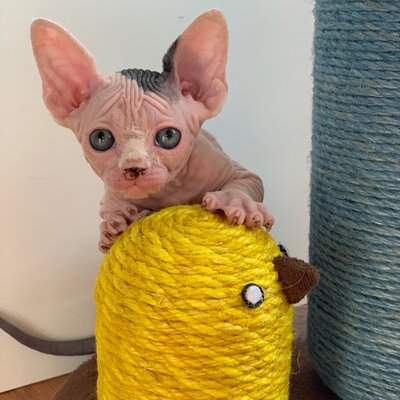
Even without fur, Sphynx cats carry the same pigment genetics as any other cat — you just see color in the skin rather than in a coat. Their skin can shift subtly with the seasons too, often darkening slightly with more sun exposure, similar to a light tan.
Common Colors
Solid colors include black, white, blue (a soft gray), chocolate, lilac, cinnamon, red, and cream. Because skin reads differently than fur, a "black" Sphynx often looks more charcoal-gray in certain light, and a "white" Sphynx typically has a warm, pinkish tone rather than true white.
Common Patterns
Tabby patterns (mackerel, classic, spotted) show up as visible striping or blotching in the skin. Tortoiseshell and calico patterns appear as patches of color, most easily seen on the face and legs. Bicolor and van patterns combine a solid color with white patches in specific distributions.
Does Color Affect Care or Personality?
No — color and pattern are purely cosmetic and have no bearing on temperament, health, or the grooming routine your cat needs. Every Sphynx cat, regardless of color, needs the same bathing, ear cleaning, and temperature management.
A Note on "Rare" Colors
Be cautious of breeders charging significantly more for "rare" colors without transparency about health testing. A responsible breeder prioritizes health screening (especially for HCM) over color rarity, and color should never come at the expense of that.
❓ Frequently Asked Questions
Do Sphynx cats have skin color, even without fur?
Yes, they carry the same pigment genetics as any cat, visible in their skin rather than in a coat — including solid colors, tabby patterns, and tortoiseshell patterns.
Why does my white Sphynx cat look pink?
Skin without fur often shows a warmer, pinkish undertone rather than true white, which is completely normal for the breed.
Does a Sphynx cat's skin color change over time?
It can shift subtly, often darkening slightly with more sun exposure, similar to how skin tans.
Are certain Sphynx cat colors healthier than others?
No, color and pattern are cosmetic and unrelated to health or temperament. Health testing (especially for HCM) matters far more than color when choosing a breeder.
Should I pay more for a 'rare' colored Sphynx kitten?
Be cautious. Rarity of color shouldn't come at the expense of health testing — prioritize a breeder's health screening practices over cosmetic rarity.
📚 Related Reading
Still have questions about your cat?
Book a free 15-minute initial consultation — we'll talk through your cat's specific needs.