Understanding
Cat Body Language
Cats communicate constantly through posture, tail, ears, and eyes. Here's how to read the signals accurately, and catch early signs something's off.
- A high, curved tail generally signals confidence and friendliness.
- Flattened ears signal fear, irritation, or defensiveness.
- A slow blink is a widely recognized sign of trust.
- Read body language as a whole picture, not one signal alone.
- Purring doesn't always mean happiness — context matters.

Tail Signals
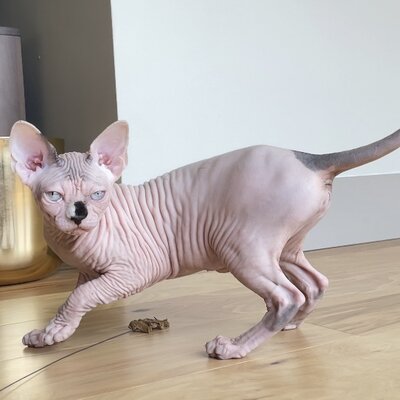
A tail held high, often with a slight curve at the tip, generally signals confidence and friendliness. A puffed-up tail signals fear or aggression. A low, tucked tail suggests anxiety, and a tail flicking or thumping rapidly usually means irritation or overstimulation — a good cue to give your cat space.
Ear Position
Forward-facing ears generally indicate interest and alertness. Ears flattened sideways or backward ("airplane ears") signal fear, irritation, or defensiveness. Sphynx cats' large ears make this especially easy to read — see my Sphynx Cat Care Guide for more on their expressive ears specifically.
Eyes & Blinking
A slow blink directed at you is often described as a "cat kiss" — a sign of trust and contentment. Dilated pupils can mean excitement, fear, or overstimulation depending on context, while narrowed, relaxed eyes generally signal calm comfort.
Body Posture
A relaxed, loose body with an exposed belly (not necessarily an invitation to rub it) signals trust. A crouched, tense body with weight shifted backward suggests fear or readiness to flee or defend. Kneading and purring together usually indicate contentment, though purring alone can also occur during stress or pain.
Putting It Together
Body language is most reliable read as a whole picture rather than one signal in isolation — a puffed tail combined with flattened ears and dilated pupils tells a clearer story than any single cue alone. Learning your own cat's individual patterns over time is the best way to catch subtle signs of stress early.
❓ Frequently Asked Questions
What does it mean when a cat's tail is puffed up?
It generally signals fear or a defensive, aggressive state — the cat is trying to appear larger. Give your cat space and try to identify what triggered it.
Is a slow blink from a cat really a sign of affection?
Yes, a slow blink directed at you is widely considered a sign of trust and contentment, sometimes called a 'cat kiss.'
Why does my cat flatten its ears?
Flattened or 'airplane' ears usually indicate fear, irritation, or defensiveness. It's a good cue to back off and reduce whatever is causing the stress.
Does purring always mean a cat is happy?
Not always. While purring often signals contentment, cats can also purr during stress, pain, or anxiety as a self-soothing behavior, so context matters.
How do I know if my cat wants to be picked up or petted?
Look at overall body language: a relaxed posture, forward ears, and a raised, gently curved tail suggest receptiveness, while a tense body or flattened ears suggest otherwise.
📚 Related Reading
Still have questions about your cat?
Book a free 15-minute initial consultation — we'll talk through your cat's specific needs.