How to Care for a Sphynx Cat —
skin, ears & everyday grooming
Sphynx cats are famously low-shedding, but not low-maintenance. Here's exactly what their bare skin needs — bathing schedule, ear cleaning, warmth, and diet — to stay healthy and comfortable.
- Bathe every 1–2 weeks to remove the oily buildup fur would normally absorb.
- Clean ears every 3–7 days — Sphynx cats produce more wax than furred breeds.
- Keep them warm — no fur means poor insulation; heated beds and sweaters help in cool rooms.
- Trim nails every 1–2 weeks; delicate skin scratches more easily than furred skin.
- Nutrition matters — a nutrient-dense diet directly supports skin barrier health.

Why Sphynx Cats Need Different Care
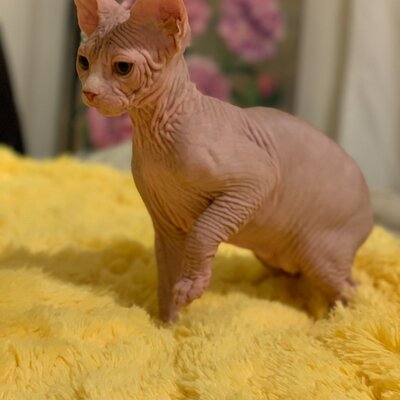
A Sphynx cat's skin does the job that fur normally does for other cats — which means the everyday routines you'd skip with a furred cat become essential here. There's no coat to soak up body oils, buffer temperature swings, or block the sun, so bathing, ear cleaning, warmth, and nail care all move from "nice to have" to "non-negotiable."
None of this is complicated once it's part of your routine. Below is exactly what I do for my own Sphynx cats, based on years of hands-on experience and guidance from holistic veterinarians.
Bathing: How Often and What to Use
Because Sphynx skin produces sebum (oil) that would normally be absorbed by fur, most Sphynx cats need a bath every 1–2 weeks. Skip it too long and you'll notice a brownish, waxy residue building up in skin folds, especially around the tail base, paws, and ears.
Use a gentle, non-drying cleanser — I recommend Dr. Bronner's unscented Castile soap or a vet-formulated medicated shampoo if your cat has sensitive or flaky skin. See my full list of the products I personally use on the Care Essentials page.
Avoid over-bathing, too — stripping the skin too often can actually increase oil production as the skin tries to compensate. Watch your individual cat and adjust frequency accordingly.
Ear Cleaning: A Non-Negotiable Routine
Sphynx cats' large, open ears mean more wax buildup and more exposure to dust and debris. I clean my cats' ears every 3–7 days using a gentle, natural ear cleaner — never cotton swabs deep in the canal, which can pack debris further in or damage the ear.
My go-to is Vet Organics EcoEars, listed on my Care Essentials page. Apply a few drops, gently massage the base of the ear, then wipe the visible folds with a soft cloth or cotton pad.
Temperature & Warmth
Without fur for insulation, Sphynx cats chill more easily and run warmer to compensate — their resting body temperature and metabolism are naturally a bit higher than a furred cat's. In cooler rooms, provide a heated cat bed, a warm sweater, or a sunny (supervised) window spot. Many Sphynx owners notice their cats seeking out laptops, radiators, or a warm lap — this is completely normal.
On the flip side, unprotected skin can sunburn. If your cat enjoys a sunny windowsill or supervised outdoor time, keep exposure short and consider a pet-safe sunscreen for prolonged sun.
Nail Care & Skin Fold Checks
Trim nails every 1–2 weeks — Sphynx skin is thinner and more delicate than furred breeds, so overgrown nails are more likely to cause accidental scratches during normal play or grooming. While you're at it, do a quick visual check of skin folds (neck, armpits, tail base) for redness, irritation, or buildup.
Diet's Role in Skin Health
Skin is the largest organ in the body, and it reflects overall nutrition. A nutrient-dense, species-appropriate diet — rich in quality animal protein and balanced omega fatty acids — directly supports the skin barrier, reduces excess oil production, and can noticeably improve coat-free skin condition. This is one of the reasons I feed a raw diet and recommend targeted immune and skin support like transfer factors where appropriate.
Warmer Than Average
Sphynx cats tend to run a touch warmer than furred breeds and often seek out heat sources — laptops, sunny windows, and warm laps are Sphynx favorites for a reason.
❓ Frequently Asked Questions
Do Sphynx cats need regular baths?
Yes. Most Sphynx cats need a bath every 1–2 weeks because their skin produces oils that would normally be absorbed by fur. Without regular bathing, oily residue builds up in skin folds.
Why do Sphynx cats get so oily or dirty?
Sphynx cats aren't actually hairless — they have fine, downy fuzz — but they lack the coat that normally absorbs sebum (skin oil). That oil accumulates on the skin surface instead, which is why regular bathing is part of standard Sphynx care.
Are Sphynx cats hypoallergenic?
No. Cat allergies are primarily triggered by a protein (Fel d 1) found in saliva and skin dander, not fur itself. Sphynx cats still produce this protein, so they are not truly hypoallergenic, though some allergy sufferers report milder reactions since there's less fur to trap and spread dander.
Can Sphynx cats go outside?
Only with supervision and precautions. Their skin can sunburn quickly and they chill more easily in cold or wind, so outdoor time should be short, shaded or protected, and closely monitored.
How often should I clean a Sphynx cat's ears?
Every 3 to 7 days is typical, since Sphynx cats tend to produce more ear wax than furred breeds. Use a gentle, natural ear cleaner and a soft cloth rather than cotton swabs deep in the canal.
📚 Related Reading
Still have questions about your cat?
Book a free 15-minute initial consultation — we'll talk through your cat's specific needs.